Did you know most food founders hand a developer their idea and nothing else?
Your concept needs a specific set of parameters before anyone can build it. This is where to start.
I've seen this far too many times: A founder who poured months, sometimes more than a year, into product development — only to end up with a subpar prototype. Or worse: nothing but money lost and time wasted.
Understandably, they're angry. Fingers get pointed at the developer they hired. At the manufacturer. At themselves, for not doing better research.
But here's what's almost always actually going on: they never defined their product to the standard a developer actually needs to build it.
It's the classic trap of not knowing what you don't know...
This isn't a failure of intelligence or effort. It's not knowing what questions to ask, what to push back on, or what details have to exist on paper before anyone can responsibly pick up where your vision leaves off.
You probably already know:
How to describe the product in a way that gets people genuinely excited
The white space your product is filling
Your competitors' shortcomings
A number of creative ways to market it
But did you know this isn't enough information for a developer to:
Build a prototype that matches your vision
Gauge compliance with FDA regulations
Assess if it can be manufactured at scale
Think through the roadmap ahead to anticipate timeline and budget
What you have is a concept open to miscommunication...
Without a Product Development Brief, you're asking a developer to read your mind — maybe even fill in the blanks with their own ideas or limiting beliefs. Can you imagine the risks with that?
This is your company. Your product. Your vision. The Product Development Brief puts it all on paper in the right language, covering the right parameters. Now anyone who touches your concept is working from your blueprint, not their assumptions.
You already have the idea. Now let's make sure it's buildable.
There's a document that changes everything. It's called a Product Development Brief.
A Product Development Brief is the single most important document you can create before entering any conversation about manufacturing, formulation, or scaling your food product.
It captures every essential detail about your product: your formula parameters, your target specs, your intended production process, your packaging requirements, and more. It's what transforms a great idea or an informal recipe into something manufacturers can actually work with.
Most food entrepreneurs skip this step entirely. They show up to manufacturer meetings without it, spend months in back-and-forth they didn't anticipate, and pay dearly for scope changes and the confusion.
The ones who do it right show up prepared, credible, and ready to move.
I created this Brief — and now I'm teaching you how to complete it.
I'm a food scientist and product developer. My clients hire me to take their products from concept to commercial reality. One of the first things I do with every client is build a Product Development Brief.
I've now packaged that exact tool — along with a comprehensive guide and a 4-week coaching sequence — so you can do the foundational work yourself, before you need to hire anyone like me.
This is not a generic template. It's the culmination of 10+ years of first-hand experience and the same framework I use with paying clients, taught to you directly for a fraction of the cost.
Our Valued Clients






What you'll have when you're done...
By completing this Toolkit, you'll walk away with a professional, ready-to-use Product Development Brief that sets your product up for consistent, scalable, compliant production — without the costly guesswork.
You'll gain the knowledge, language, and confidence to lead manufacturer and product developer conversations like a pro, having already done the foundational work that consultants typically charge thousands of dollars to guide you through.
A complete, professional brief you can hand directly to any manufacturer, co-packer, or food scientist — little back-and-forth, no missing details.
Define your product to the exact specifications required for consistent, scalable, and compliant production, so nothing gets lost in translation.
Walk into manufacturer and product developer meetings already knowing what they'll ask — and ready with the right answers.
Bypass ballooning budgets by completing the foundational work any developer would have to do before getting started.
Identify the specifications that matter and communicate them clearly — avoiding scope changes and endless back-and-forth that drains your budget.
Is this you?
You've been making this at home for years.
Friends ask for it at every gathering. A few people have told you to sell it — but you have no idea what the next step looks like.
The Toolkit gives you the framework, the vocabulary, and the four-week guidance to get there — so you get clear about exactly what you want, and show up to every conversation prepared.
You've started searching for experts.
Co-packers, manufacturers, and food scientists — but quickly realize you don't even know what questions to ask and they won't respond to your emails.
Whether you eventually hire a formulator or develop the product yourself, the first step is still the same. You need to document what you're building in a format that manufacturers, and R&D professionals require to take your project seriously.
You see a gap in the market that no one is acting on.
You know what's missing from the shelf, and you have a concept for something better. You understand branding. You understand your customer. You just don't know how to navigate creating the product.
You're not sure whether to hire someone or do it yourself.
But you know you need to get more serious about what this product actually is before you can do either.
Start with the work. Choose how much expert support you want behind you.
Product Development Brief Toolkit
LITE
Ready to define your product before spending time or money on formulation?
This gives early-stage founders a structured way to capture and communicate exactly what they're building — whether you're going DIY or bringing in a developer.
PDB Template
PDB Example
Reading Guide
4-Week Email Program (optional)
Built for founders moving from idea to prototype. Complete it in a weekend or work through it weekly.
Digital & printer-friendly.
$149
Special Offer: (optional)
If you enroll in From Idea to Formula within 60 days AND with a completed PDB, you will save $250 (discounted price of $1,750).
Product Development Brief Toolkit
STANDARD
Everything in Lite, plus expert review of your completed Product Development Brief.
With 10+ years in food science and product development, I'll review your Brief in full — flagging conflicts you may not know to look for, identifying gaps that would slow down a developer, and answering your specific questions with constructive, actionable feedback.
This is the same critical eye I bring to paid client engagements.
$249
Special Offer: (optional)
If you enroll in From Idea to Formula within 60 days AND with a completed PDB, you will save $600 (discounted price of $1,400).
Product Development Brief Toolkit BONUS
Everything in Lite and Standard, plus a 1-hour private call with a food scientist and product developer with 10+ years of experience.
Your Brief review only goes so far — some challenges are better worked through in real time. Bring your specific questions, product obstacles, or big-picture goals, and we'll dig into what's actually standing between you and a viable product. You're welcome to share agenda items in advance.
$449
Special Offer: (optional)
If you enroll in From Idea to Formula within 60 days AND with a completed PDB, you will save $900 (discounted price of $1,100).
Not sure which option is right for you? Most founders start with Standard — the full Brief, professionally reviewed before it goes anywhere. Working within a tighter budget? Lite is your entry point. Want direct strategic input on your specific product? Bonus.
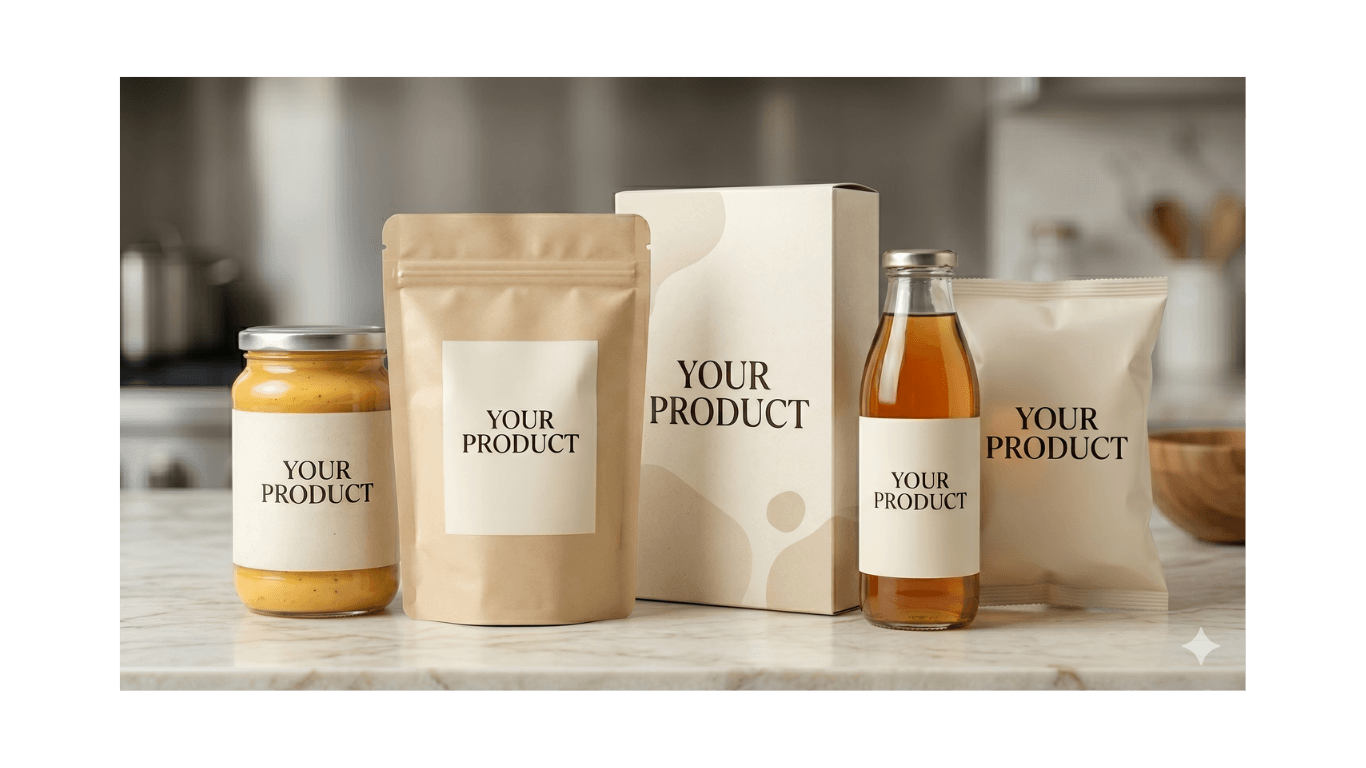
Image generated by Gemini.
MJ Kinney
MJ Kinney is a food scientist and product developer with over a decade of experience in taking food products from concept to commercial launch.
As the founder of FareScience, she's helped companies of all sizes (including many pre-revenue startups) develop better-for-you foods that balance nutrition, taste, affordability, and scalability.
Something bothered her along the way: the brands on shelf didn't always have the best ideas or even the best products. They just had access to resources most small, emerging companies never do.
The Product Development Brief Toolkit is her answer to that. Not something she learned from a book, but something she invented after countless successful projects — to give every resourceful, self-directed founder access to the same caliber of thinking that's historically been reserved for brands with the biggest budgets.
As Featured In

Common questions:
This is for food and beverage entrepreneurs at any stage — from pre-revenue makers testing their first formula to existing brands preparing to scale. If you're getting ready to have any serious conversations about manufacturing or production, you need this document first.
You could complete this entire exercise in a weekend, though I recommend a pace of 1–2 hours per day over 3–4 days if you prefer a more thoughtful approach. It's worth noting that this is a living document — as you speak with manufacturers and product developers and learn what's feasible, you may want to revisit and adjust your parameters. It's completely normal for brands to refine their Product Development Brief several times before any hands-on formulation begins. Think of completing this Toolkit as laying the foundation, not the finish line.
My full course, From Idea to Formula, covers the complete product development process — and yes, it includes the PDB material you're working through here. That's intentional.
Think of this as purchasing a meaningful piece of the course in advance — at a lower risk, lower cost entry point. When you're ready to go further, the amount you've already invested carries over. The more you invest in the PDB tier, the larger your course credit. It's not a gimmick — it's how I want to reward the people who show up ready to do the work.
The 60-day window exists because it aligns with the time it should take to complete your brief and consider if this course is the right fit for you. If you finish your PDB and enroll within 60 days, you're exactly the kind of student I want in the course.
Yes — this Toolkit was designed to work across food and beverage product categories. Whether you're developing a snack, sauce, beverage, supplement, baked good, or anything in between, the foundational work of defining your product's parameters, ingredients, labeling, and production requirements is universal. Every food product heading toward scalable, compliant production needs this thinking done. This Toolkit helps you do it.
No. The PDB stands entirely on its own. Whether or not you ever enroll in the course, completing a professional Product Development Brief will save you time, money, and confusion at every stage of your product's development. The course discount is a bonus for those who want to go deeper — not a requirement.
Your product development journey starts here.
Simply click the "Get Started" button below and follow the prompts to complete your purchase.
You'll get instant access to the full Product Development Brief Toolkit — including guided worksheets, instructional content, and the professional templates used in real commercial product development.
Lifetime access to all Toolkit materials — Work through the PDB at your own pace and return to any section as your product evolves. Receive all future updates at no additional cost.
A deliverable you'll use from Day 1 — Walk away with a completed, professional Product Development Brief ready to hand to a manufacturer, co-packer, or food scientist.
Create Your Free Account